


The Real Thing Doesn't Need a Lab
The Real Thing Doesn't Need a Lab
Why natural colored and champagne diamonds are in a category of their own — and why their lab-grown counterparts simply aren't.
There's a version of this conversation that's exhausting and a version that's clarifying. I want to have the clarifying one.
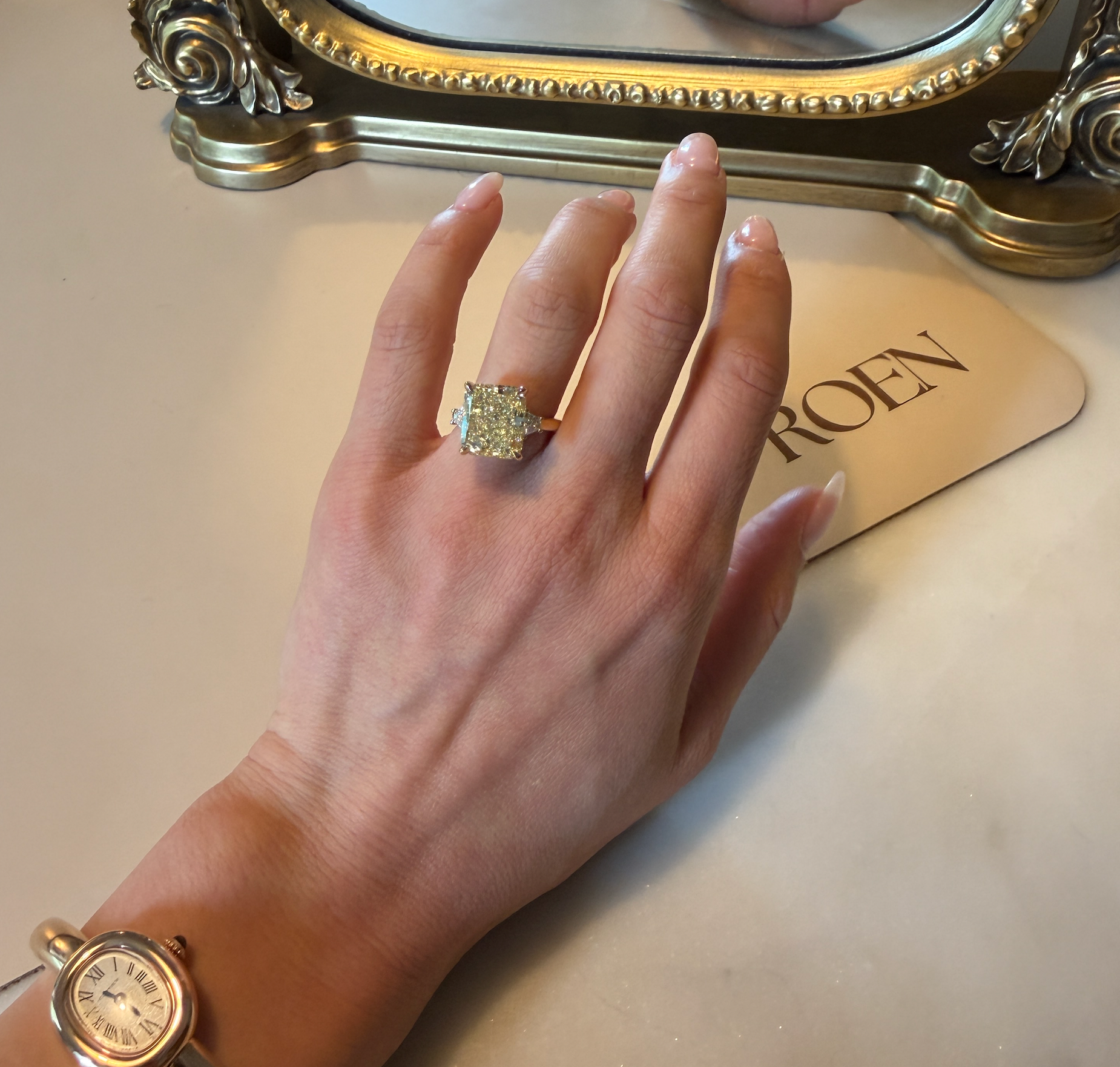
Lab-grown diamonds have their place. For a classic colorless round brilliant where you want maximum size within a budget, I understand the appeal. But the moment we start talking about colored diamonds — pinks, blues, greens, yellows — or the warm, earthy depth of a champagne stone, the lab-grown argument falls apart entirely. Not because of sentiment. Because the colors themselves are inferior. And the science backs that up.
What Makes a Natural Colored Diamond Rare
According to the GIA — the global authority on diamond grading — only one in every 10,000 carats of fashioned diamonds displays fancy color. For the more intensely saturated stones, those odds drop to one in 25,000. Natural fancy colored diamonds represent just 0.4% of all diamonds the GIA has graded over the past two decades.
That rarity isn't a marketing angle. It's geology. Natural colored diamonds acquire their hue through conditions that took billions of years to occur: trace nitrogen atoms create yellow, boron creates blue, structural distortion in the crystal lattice creates pink and red. These are irreproducible accidents — the geological equivalent of a one-of-one.
And the colors themselves reflect this. Natural fancy colored diamonds develop complex, layered hues with secondary tones and subtle variations in saturation throughout the stone — what gemologists call color zoning — that result from the irregular, uncontrolled nature of geological formation. No two natural colored diamonds are the same. The GIA grades each one individually because each one is, in fact, individual.
Red diamonds, the rarest of all, number fewer than 30 known specimens in existence worldwide. The rarest shades — blue, pink, red, pure orange — regularly command over a million dollars per carat at auction. The Blue Moon of Josephine, 12.03 carats of vivid blue, sold for approximately $4 million per carat. A 59.60-carat vivid pink called the CTF Pink Star fetched $71.2 million — still the highest price ever paid for any diamond or jewel at auction.
A lab can produce a blue or pink diamond in a matter of weeks. That's exactly the point.

The Problem with the Colors Themselves
This is where the conversation usually stops too soon. Most people focus on rarity and resale value when comparing lab and natural colored diamonds. What gets skipped over is the more fundamental issue: the way lab colored diamonds actually get their color.
Pink
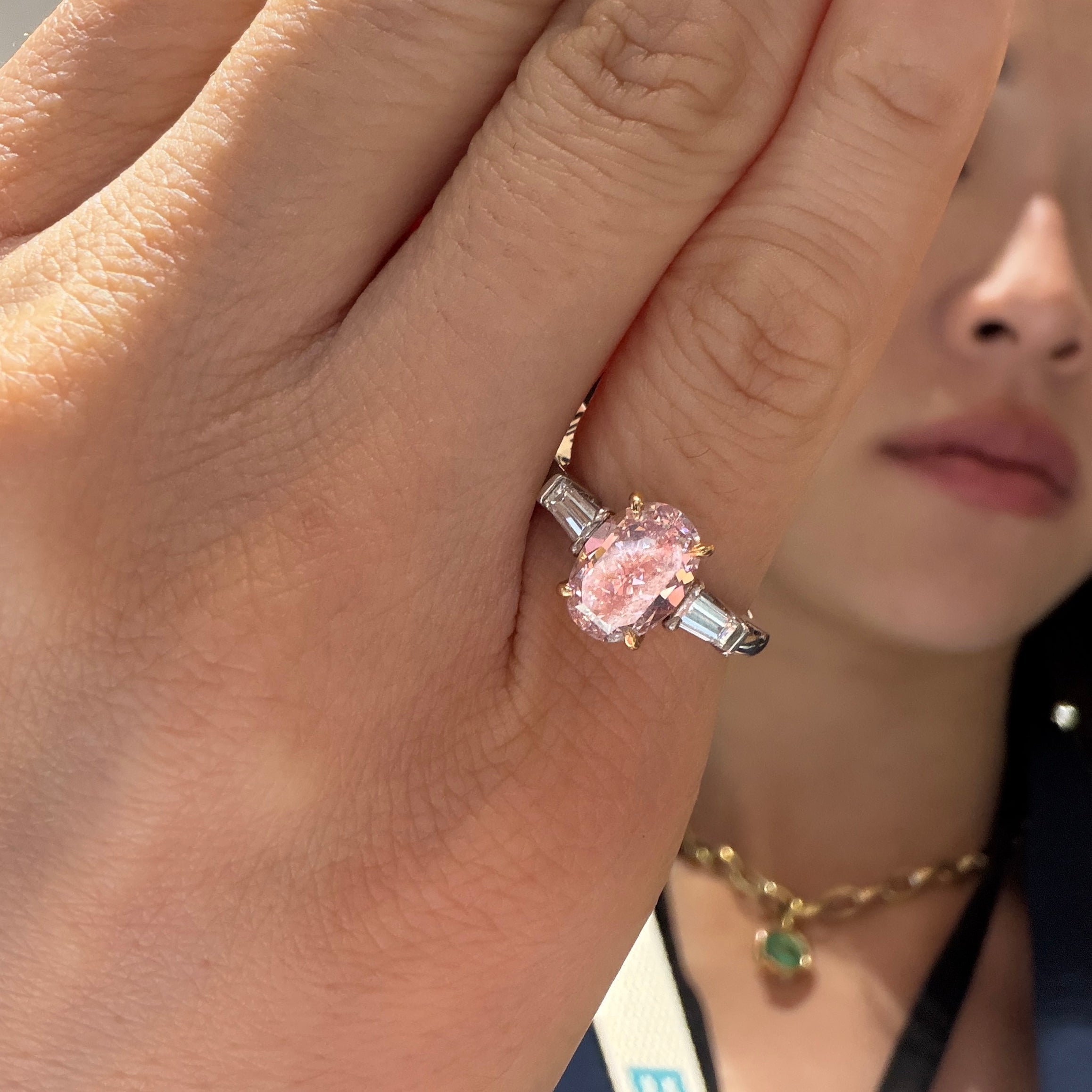
Natural pink diamonds are pink because of plastic deformation — a structural distortion that occurs in the diamond's crystal lattice as it's subjected to extreme shear pressure deep in the earth's mantle, over billions of years. GIA researchers have confirmed that there is no known laboratory process capable of replicating this mechanism. The natural phenomenon that produces pink diamonds cannot be reproduced in a controlled environment.
So what do labs do instead? The vast majority of lab-grown pink diamonds are grown as colorless or near-colorless stones, then subjected to post-growth irradiation and annealing — essentially, they're zapped with radiation and heat after the fact to shift the stone into the pink range. The pink was not in the diamond. It was added to it. GIA's own research team stated explicitly: the most common method of producing a lab pink diamond is irradiating a colorless lab-grown stone, then heating it to temperatures between 600°C and 1,000°C. The result is a manufactured approximation of a color that nature produces through a mechanism science still hasn't fully replicated.
Blue
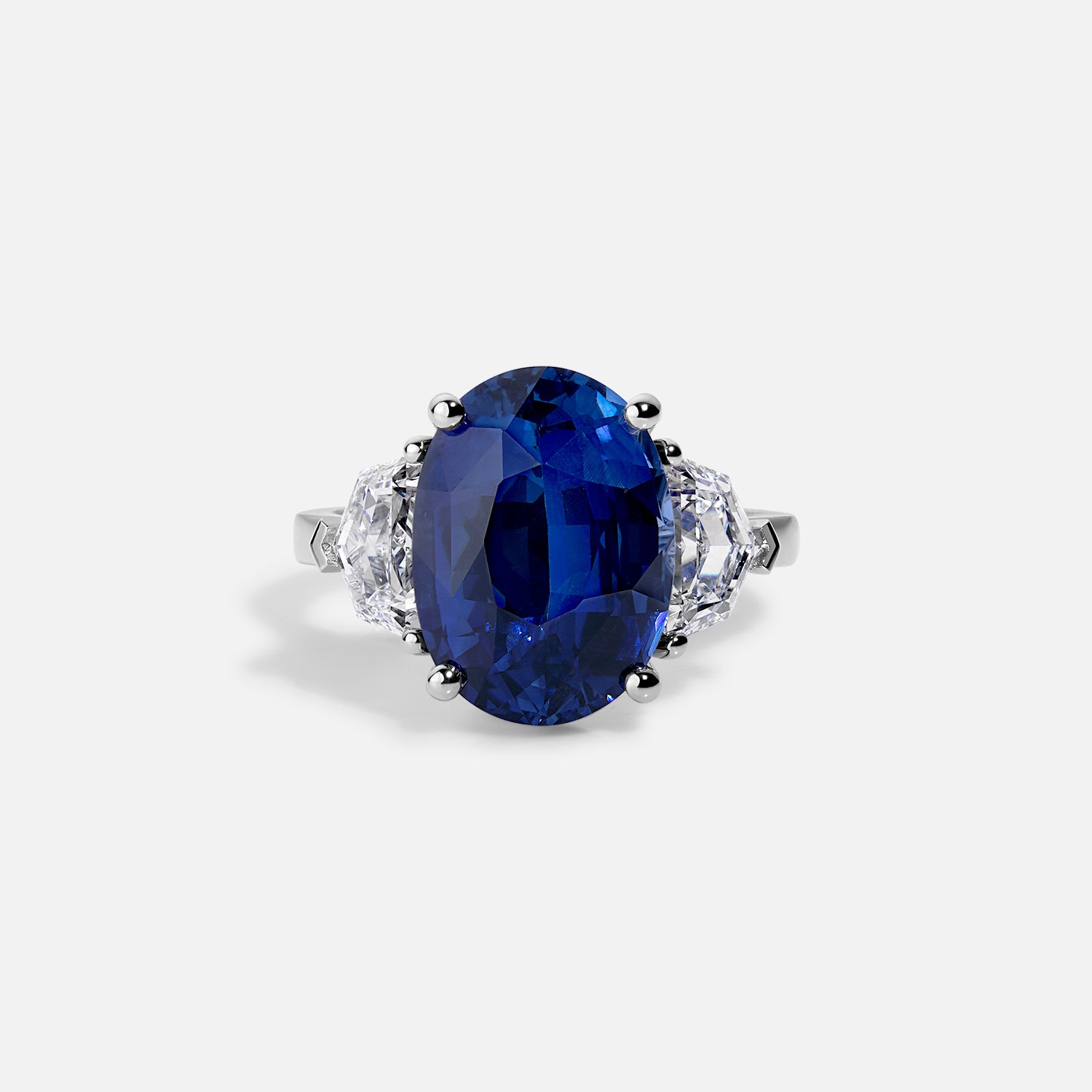
Natural blue diamonds are blue because of trace boron in the crystal lattice — boron so scarce in the Earth's mantle that its presence in a diamond is genuinely anomalous. These stones belong to the Type IIb classification, representing less than 0.1% of all natural diamonds.
Lab blue diamonds introduce boron artificially during the growth process. The distinction matters beyond origin: HPHT-grown lab blue diamonds can carry a residual blue-grey tint — a byproduct of the production process, not a feature of the color — that gemologists have noted is detectable to the naked eye and doesn't occur in natural blue diamonds. It's an artifact of manufacturing, not geology.
The Uniformity Problem
Here's the thing that the lab-grown industry actually markets as a selling point, but that any fine jewelry connoisseur should hear differently: lab colored diamonds are optimized for color uniformity. The growth conditions are controlled specifically to produce consistent, even saturation across the stone.
Natural colored diamonds are not uniform. Their color shifts, concentrates, zones — and that individuality is inseparable from their beauty. A natural Fancy Vivid yellow has a depth and warmth that comes from billions of years of nitrogen interaction that cannot be recreated in a reactor. The color in a lab stone is engineered to a spec. The color in a natural stone is a discovery.
The GIA's decision in 2025 to stop grading lab-grown diamonds with traditional 4Cs nomenclature — downgrading them to simply "Premium" or "Standard" — is a direct acknowledgment of this. Over 95% of lab diamonds cluster into the same narrow band of characteristics. They are, by design, interchangeable. Natural colored diamonds are, by definition, not.
On Champagne Diamonds Specifically
Champagne diamonds — warm brown stones ranging from pale honey to deep cognac — occupy a particular corner of this conversation. They aren't rare in the way a natural blue diamond is rare, but their character is entirely natural and entirely unrepeatable.
Their color comes from a combination of nitrogen impurities and structural distortion in the crystal lattice — the result of billions of years of geological pressure. That structural complexity is what gives each champagne diamond its particular warmth: the way it reads differently in candlelight versus daylight, the secondary hues that shift from golden to amber to orange-brown depending on the depth of color and cut. No two read the same.

The primary source was the Argyle Diamond Mine in Western Australia's East Kimberley region — a lamproite volcanic rock deposit, one of the rarest geological environments for diamond formation on earth. Argyle closed permanently in November 2020. The champagne and cognac stones it produced over nearly four decades of operation are now a finite, diminishing supply, which is already pushing prices up.
The largest faceted diamond in the world — the Golden Jubilee, at 545.67 carats — is a champagne diamond. Discovered in South Africa's Cullinan mine in 1985, it was gifted to the King of Thailand in 1997 and is estimated to be worth between $5 million and $12 million.
A lab-grown brown diamond carries none of this. The color is produced by adjusting nitrogen levels during growth — dialed in, not discovered. And unlike a natural champagne stone, which carries the complexity of uncontrolled geological forces, a lab-grown equivalent is calibrated for consistency. It will look like every other lab brown diamond produced under the same conditions. That's not a feature. That's the problem.
What the Market Knows
The value question reinforces all of the above. Lab-grown diamond prices have dropped approximately 74% between 2020 and 2024, with wholesale prices for a one-carat lab diamond falling to around $191 per carat by mid-2025. Most jewelers won't buy them back. Those who do typically offer 20-40% of what was paid — not of the original price, but of today's already-deflated market price.
The market is simply reflecting what gemologists already know: a stone that can be reproduced in unlimited quantity, whose color was engineered rather than discovered, and which has been downgraded by the world's most respected grading institution to a binary "Premium or Standard" classification — is not, in any meaningful sense, a fine colored diamond.
Natural colored and champagne diamonds are graded individually because they are individual. They carry colors that emerged from processes science cannot replicate. They appreciate — or at minimum hold — because their supply is finite and their character is singular.
That's what you're buying when you buy the real thing.
Sources: Gemological Institute of America (GIA), Gems & Gemology Research Journal, Rapaport, Tenoris retail diamond market analytics, Paul Zimnisky Global Diamond Market Research, Liori Diamonds 2026.

 Have a question? Text us.