




What You're Really Buying When You Choose a Gemstone Engagement Ring
A guide to sapphires, emeralds, and knowing the difference between fine and everything else.
TL;DR
Not all sapphires are Kashmir. Not all emeralds are Colombian. And not all gemstones — even ones sold by well-meaning jewelers — belong in a ring you'll wear for the rest of your life. Understanding the difference between fine-grade goods and commercial goods is the single most important thing you can do before choosing a colored stone for your engagement ring. This guide will walk you through what that difference looks like, what it costs, and what to look for when you're ready to begin.
The Gemstone Market Is Nothing Like the Diamond Market — And That's Important to Understand
When most people start thinking about an engagement ring, they come in with a diamond mindset: grades, certificates, cut quality, lab reports. The language is tidy. The grading is standardized. You can compare two stones on paper.
Colored gemstones operate in an entirely different world.
Sapphires and emeralds have been traded for centuries across cultures, continents, and centuries of oral tradition — long before gemological laboratories existed. Even today, the gem trade moves largely on relationships: who your dealer knows, which miners they work with, how long they've been in the market. Certification exists and matters, but it is not the primary language of this industry the way GIA reports are in the diamond world.
This is not a red flag. It's simply the nature of a market built on beauty, rarity, and expertise — rather than on algorithmic grades. It does, however, mean that who you work with matters enormously.
Fine Grade vs. Commercial Grade — The Distinction That Defines Everything
In the gemstone world, there are broadly two tiers of goods: fine grade and commercial grade. The difference between them is not subtle. When you place them side by side, it is immediately and unmistakably apparent.
Commercial-grade goods are what you find in most retail jewelry stores, mass-market e-commerce sites, and the vast majority of engagement rings sold at accessible price points. These stones are heavily treated to mask their natural shortcomings — flooded with oils, resins, and fillers to improve their apparent clarity. Their color is often uneven, too dark, or lacking in life. They may look fine in photographs. In person, they are flat.
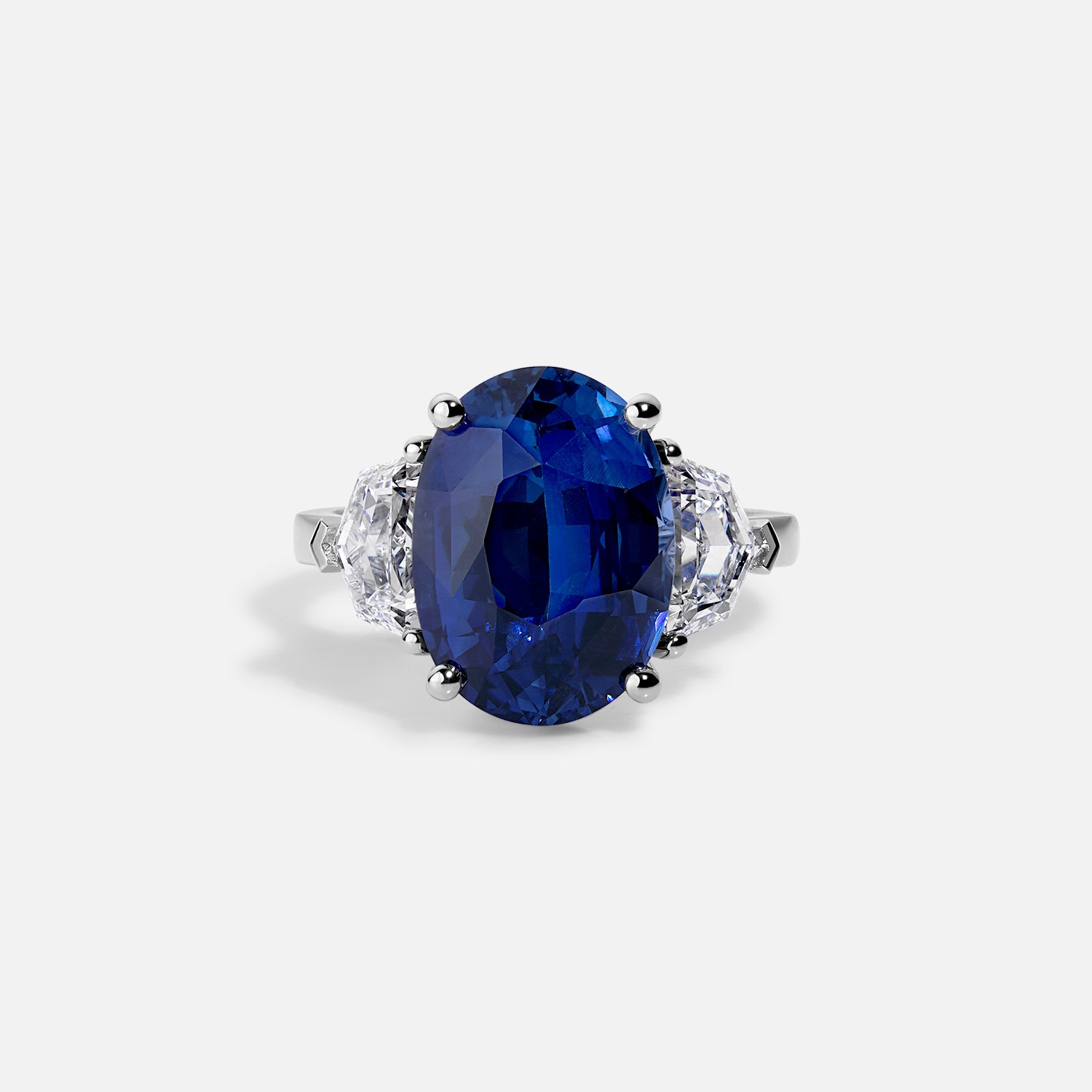
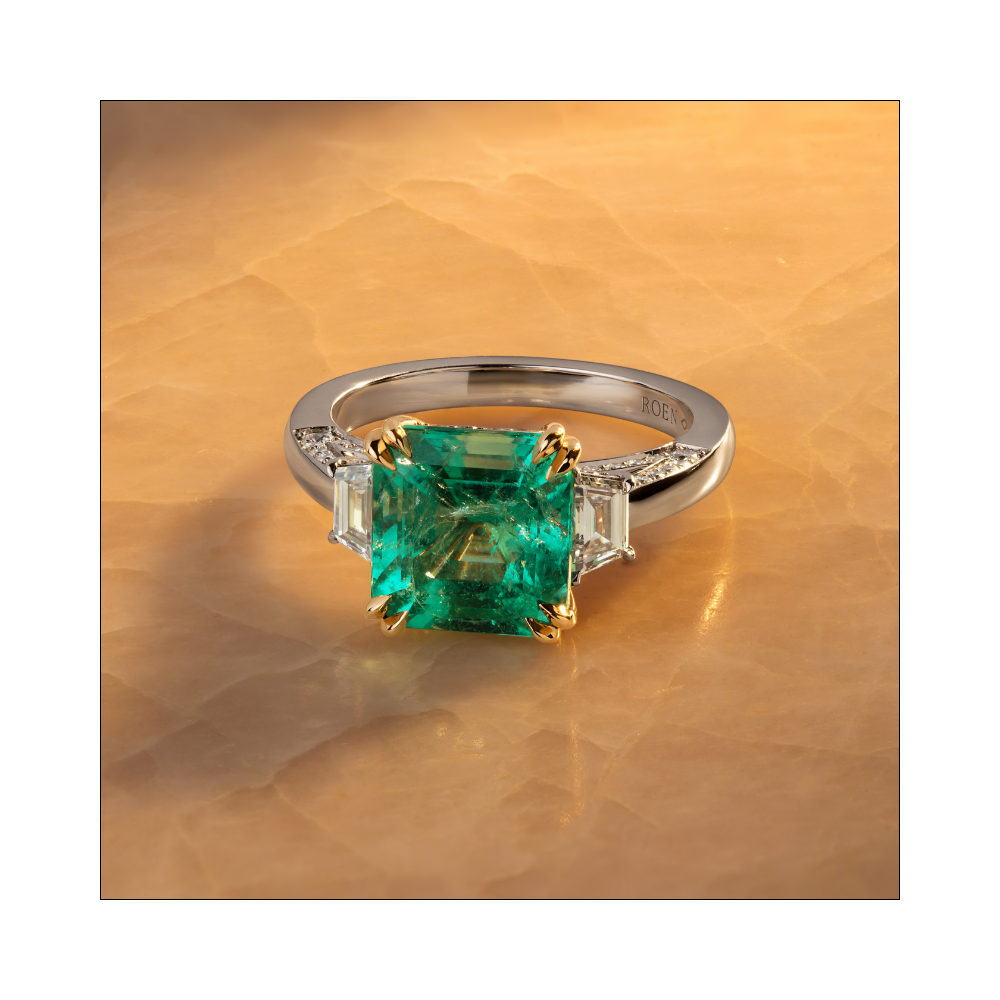
Fine-grade goods have color that is saturated, balanced, and luminous. There is an inner glow — what gemologists call life — that you simply cannot fake or treat into a stone. Fine sapphires show that particular depth of blue that seems almost to move as the light shifts. Fine emeralds have a richness that photographs struggle to capture and that makes commercial stones look almost gray by comparison.
The gap between these two tiers is not a matter of degree. It is a matter of category.
What Fine-Grade Gemstones Actually Cost
This is where many clients experience sticker shock — not because fine gems are overpriced, but because they've been conditioned by commercial-market pricing to think they're getting something comparable.
For a fine-grade sapphire, you should generally expect to begin somewhere in the range of $3,000–$8,000 per carat for a beautifully colored, well-cut stone with good transparency and minimal treatment. Exceptional stones — particularly those with sought-after origins (Kashmir, Burma/Myanmar, Ceylon) or those that are certified unheated — can command $15,000–$50,000+ per carat at the high end.
For a fine-grade emerald, retail pricing for quality stones typically begins around $2,000 per carat and can climb past $50,000 per carat for the rarest, most vividly saturated Colombian stones with near-perfect clarity and minimal enhancement.
When a price seems remarkably low for a gemstone being described as "fine" or "high quality," it almost always means the stone is commercial grade. The math simply doesn't work otherwise. Fine goods are rare. Rare things cost more.
Why Fine-Grade Gems Often Aren't Certified — And Why That's Okay
In the diamond market, a GIA certificate is table stakes. In the colored gemstone market, many of the most exceptional stones in the world change hands without any laboratory documentation at all.
This is not because the market is unregulated or untrustworthy — it's because the gemstone trade runs on something older and, in many ways, more reliable: expertise, reputation, and direct knowledge of provenance. A seasoned gem dealer who has been sourcing Kashmir sapphires for thirty years does not need a lab report to evaluate what they're looking at. Neither does a master jeweler who has handled thousands of stones throughout their career.
That said, certification through laboratories such as GIA, AGL (American Gemological Laboratories), or Gübelin is available and can add meaningful value — particularly for investment-grade purchases, unheated stones, or gems of significant size and value. At ROEN, we can arrange independent certification for any stone upon request. For clients who want that documentation, we fully support it.
The key point: the absence of a certificate is not, in itself, a reason for concern when you are working with a trusted source who can speak knowledgeably about the stone's origin, treatment history, and quality. The presence of a certificate from a reputable lab, however, is always a meaningful indicator of transparency and care.
What to Look For When Evaluating a Gemstone
Even without gemological training, there are qualities any discerning buyer can begin to recognize.
Color and saturation. In a fine sapphire, look for a tone that is neither too dark (inky, where you lose depth) nor too light (washed out). The most prized hues in sapphires are what the trade calls vivid or intense — a pure, rich blue with excellent saturation. In emeralds, look for that signature green with a slight warm undertone (Colombian) or cool, velvety depth (Zambian). Commercial stones tend toward muddy, uneven, or lifeless color.
Luster and brilliance. A fine gemstone should appear lit from within. When you tilt it gently in natural light, it should return light beautifully across its surface and depth. Dull or waxy luster is a sign of heavy treatment, poor cut, or inferior material.
Transparency and clarity. Fine-grade colored stones are never perfectly included-free — nature does not work that way — but their inclusions should not dominate the face of the stone or compromise its structural integrity. What you want is a stone that appears clean to the eye, even if inclusions are present under magnification. In emeralds specifically, some jardin (natural inclusions) is expected and accepted; what matters is that the stone is not fractured or at risk.
Cut quality. The cut of a colored stone is not held to the mathematical precision applied to diamonds, but it matters enormously. A well-cut stone will maximize the return of light and show its color at its best. A poorly cut stone — often the result of a cutter trying to preserve carat weight rather than optimize beauty — will appear darker, more included, or less alive than the rough would have warranted.
Your gut. This is not a throwaway point. When you are in the presence of a truly fine gemstone, you know it. There is a quality of magnetism and presence that commercial goods simply do not possess. Trust that instinct. If you are looking at a stone and you feel nothing, keep looking.
Who You Work With Is the Whole Game
The colored gemstone market rewards depth of relationship more than almost any other luxury category. Fine goods rarely appear on open markets at accessible prices. They move through networks of trusted dealers, long-standing partnerships, and relationships built over decades. The jeweler who can show you three mediocre sapphires is not the same as the jeweler with a deep gem network who can source a genuinely exceptional stone in your preferred hue and size.
At ROEN, our gem sourcing relationships are among our most valued assets. We work directly with partners who share our commitment to quality and transparency, and we have deep access to fine goods across sapphires, emeralds, and other precious stones. When a client comes to us looking for a specific color, size, or character of gem, we are able to go deep into the market in a way that general retailers simply cannot.
What We're Watching — Gemstone Trends Worth Knowing
The colored gemstone market is moving with intention right now. Here is where our attention is.

Unique blues and greens in sapphires: The classic cornflower blue will always have its devotees, but we are seeing increasing appetite for sapphires with distinct personality — teal sapphires with their blue-green duality, parti sapphires that shift between hues, and deeply saturated peacock tones that feel both contemporary and timeless. These stones reward the eye with complexity. For clients who want something non-traditional but still deeply precious, this is an extraordinary moment.
Unheated and untreated rubies: For investment-minded collectors and true luxury buyers, unheated ruby goods are commanding extraordinary premiums — and for good reason. Heat treatment is standard practice in the ruby trade, and a fine-quality ruby with a reputable "no heat" certificate from a laboratory like GIA or Gübelin represents a fundamentally different category of rarity. We expect continued upward pressure on these goods as discerning collectors compete for a genuinely finite supply.
Fine Colombian emeralds: the spending is going to increase here. We have watched this closely through the lens of our own client base, and the pattern is clear. Clients who begin exploring emerald engagement rings often start by looking at options across a range of origins and price points. And then they see a fine Colombian emerald in person — and everything changes. The difference between a fine Colombian and a commercial stone is not a gemological abstraction. It is visceral and immediate. The color is richer, warmer, and more alive than anything a photograph can convey. We expect meaningful growth in spending on fine Colombian goods as more clients experience this moment of recognition firsthand. When you see it, you understand.
The ROEN Perspective
We work exclusively with fine-grade gemstones. It is not a marketing position — it is the only way we know how to build something that will endure.
An engagement ring is not a fashion purchase. It is a generational object: something meant to be worn every day for decades and passed forward with meaning. That requires stones of genuine quality, set by master craftsmen who understand the material they are working with.
If you are beginning your search for a sapphire or emerald engagement ring, we would be honored to guide you. The conversation begins with the stone.
Reach out to our team at bespoke@roen.nyc — or book a private showing at our NYC atelier.

 Have a question? Text us.